A clearer path forward:
educating patients better
Patients leave appointments with complex diagnoses but nothing to refer back to. A custom after-visit summary tool changed that — in under a minute per visit.
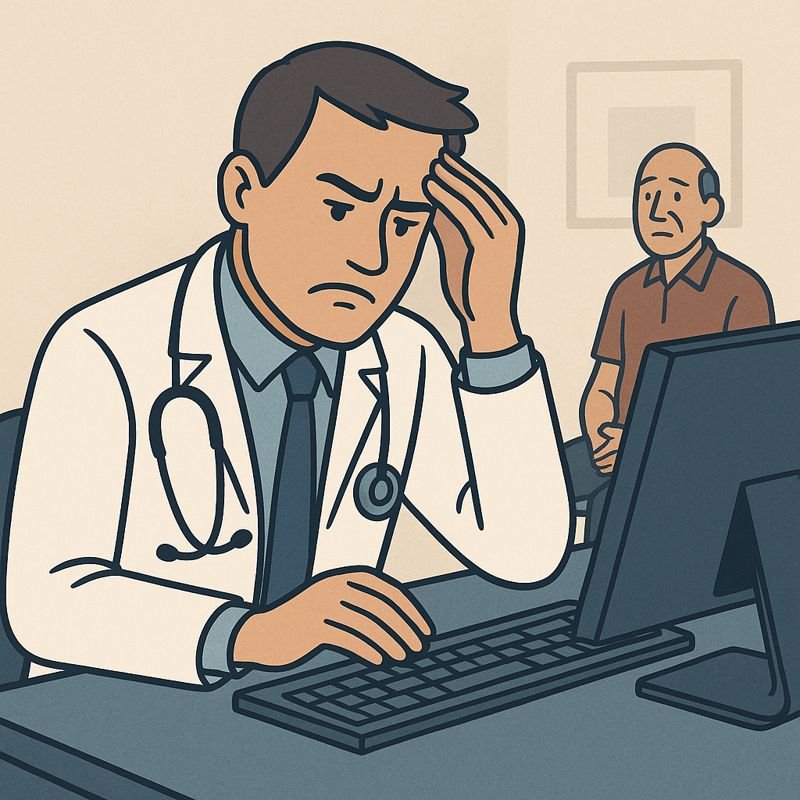
Throughout residency, a pattern became impossible to ignore: patients were expected to retain an enormous amount of information after an office visit — multiple diagnoses, multi-step treatment plans, careful follow-up timelines — with nothing to take home.
At the VA, the EMR had no option to provide patient-specific written information at all. The workaround was scratch paper and improvised Word documents. It was clear patients valued having something tangible. It was equally clear the process was unsustainable.
The problem
In private practice, the situation wasn't much better. The EMR had after-visit summary tools, but they were rarely used — the output was cluttered, difficult to customize, and not patient-friendly. When an exam uncovered multiple problems — which is most of the time — there was no efficient way to consolidate that information into a single, coherent summary.
The result was a recurring gap: clinicians either spent 5–10 minutes crafting individualized instructions from scratch, or patients left without the information they needed.
"That gap carries consequences. Patients forget key instructions, misunderstand timelines, or feel unsure about next steps — all of which affect outcomes and satisfaction."
The solution
To address this directly, we built the Ophthalmology After-Visit Summary Generator — a simple, customizable tool that lives entirely outside the EMR. It avoids protected health information, uses clean patient-friendly language, and produces a print-ready summary in under a minute.
The tool offers pre-formatted explanations for common diagnoses, with full room to edit, personalize, and add new diagnoses on the spot. The emphasis is on clarity and speed — light enough for a busy clinic day, polished enough to meaningfully improve the patient experience.
Real-world results
Since integrating this tool into clinical workflow, the difference has been immediate and consistent. Patients leave with a clear, readable explanation of their condition and a straightforward set of instructions they can reference at home. Feedback from patients, staff, and colleagues has been overwhelmingly positive.
What this means for your practice
Patient education is not a luxury — it's a core part of care. When patients understand their diagnosis and treatment plan, they're more likely to follow through, less likely to call with questions, and more likely to leave a positive review. This tool makes that level of communication achievable on a busy clinic day, without adding administrative burden.
worth solving?
Whether it's a defined project or an early-stage question — let's talk.