

A Clearer Path Forward: Improving How We Educate Patients
The Context
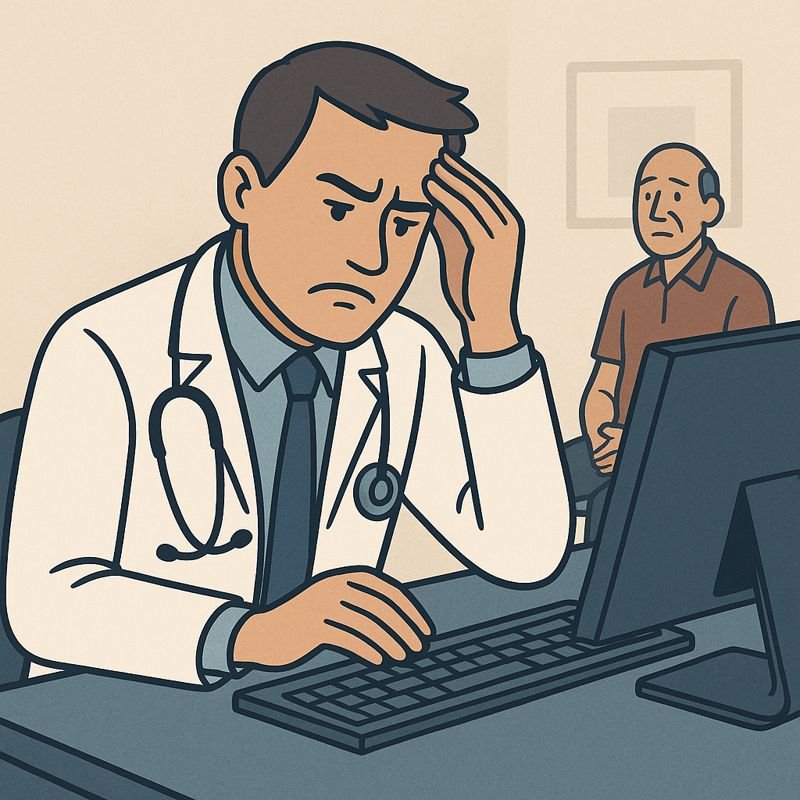
Throughout residency, one of the patterns I noticed again and again was how much information patients were expected to retain after an office visit. Ophthalmology appointments, as do all other medical specialties, can involve multiple nuanced diagnoses, multi-step treatment plans, and careful follow-up timelines. Yet at the end of the encounter, most patients walked out with only a verbal explanation, and nothing to refer back to. This was most evident at the VA, where our electronic medical software had no option to provide patient information. I often found myself sketching out personalized instructions on scratch paper or typing short summaries into Microsoft Word and then printing it just so my patients had something tangible to reference at home. It was clear that patients valued this, but creating these summaries manually was time consuming, lacked standardization, and very inefficient.

The rising trend in academic ophthalmology urgent care
When dogma doesn’t match data
At one major academic medical center, the long-held belief by the ophthalmology department leadership was that ophthalmology call volume had stayed constant. While the residents complained that the workload “felt heavier,” nobody had been able to examine the numbers. That’s where EyeQ stepped in. By structuring and analyzing years of emergency department and consult data, we were able to answer a question that had lingered for years: was the call truly heavier, or did it just feel that way? When the numbers were finally revealed, the long-standing dogma didn’t hold up.
What the data showed
Over a five-year period, ophthalmology emergency room consults increased at an average rate of 15% per year, while total ER visits rose just 3%. Put simply, ophthalmology consults grew five times faster than the emergency department overall. The growth was coming from two trends, 1) an increase in the sheer number of eye complaints showing up in the emergency room, and 2) an increased rate of emergency room doctors consulting ophthalmologists – even if the number of eye complaints hadn’t increased. Overall, the increased on-call burden wasn’t just perception, it was measurable…and accelerating.